Fri 19 December 2025
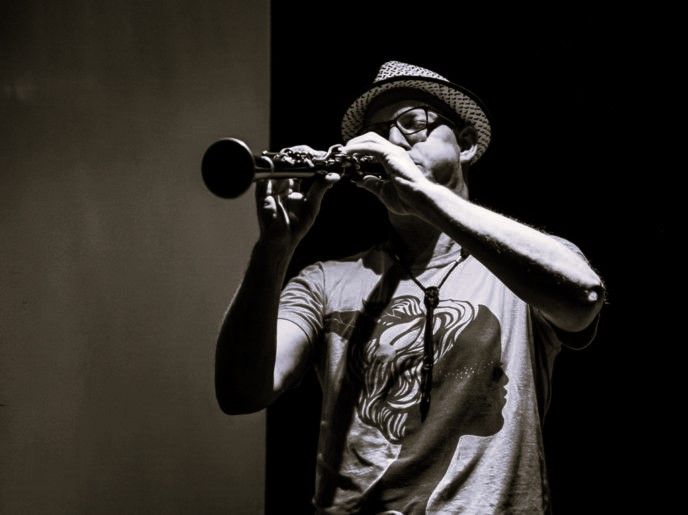
MICHAEL MOORE
He studied music at Humboldt State and in 1977 graduated from the New England Conservatory of Music, where he studied with Jaki Byard and Gunther Schuller, and was a classmate of Marty Ehrlich. He played in a variety of musical contexts, especially those in support of theatre and dance groups. By 1982 he was a regular member of Misha Mengelberg's Instant Composers Pool and had moved to Amsterdam. He was also a member of Georg Gräwe's Grubenklang Orchester.
Moore is one-third of the Clusone Trio (aka Trio Clusone and Clusone 3) with cellist Ernst Reijseger and drummer Han Bennink. Originally meant only to play a single date at a festival in Clusone, Italy, the trio toured irregularly for several years and recorded six albums, including one of freely-interpreted Irving Berlin compositions.
Moore's first recording as a leader was in 1992 but it was with 1994's Chicoutimi that he began to earn recognition as a composer. The drummerless trio on this album (Fred Hersch, piano, and Mark Helias, bass) was inspired by the duo recordings of Lee Konitz and Gil Evans and recalls in places the Jimmy Giuffre trios of the early 1960s.
Moore also plays in Jewels and Binoculars, a collective trio with bassist Lindsey Horner and drummer Michael Vatcher which is devoted to interpretations of Bob Dylan songs.[1][2] In 1986, Moore won the VPRO/Boy Edgar Award, the most prestigious jazz award in the Netherlands. In 1991, he founded Ramboy Records to document his music.
Line-up
- Barry Green - piano
- Michael Moore - klarinet, altsax
- Ruud Voesten - drums
- Stefan Lievestro - contrabas